
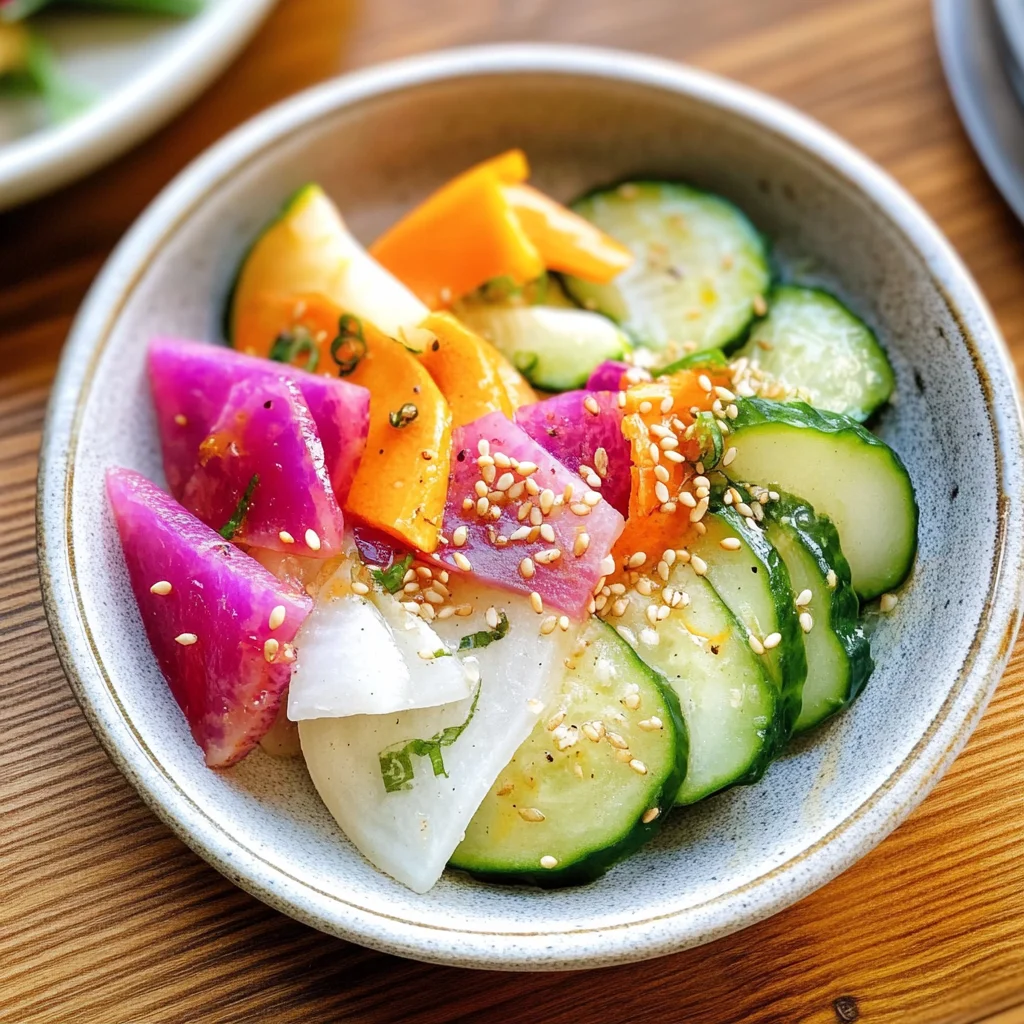
Colorful and crunchy vegetables are the star ingredients for my quick, simple Asazuke: Everyday Japanese Pickles recipe. These Japanese lightly pickled vegetables are not only ready in just 1 hour but also add a refreshing touch to any meal. Perfect as a side dish for lunch or dinner, they offer a delightful balance of flavors and textures that are sure to impress your guests. Enjoy the unique taste of Asazuke with added shiso leaves, yuzu zest, and sesame oil for an extra twist!
Why You’ll Love This Recipe
- Quick Preparation: With only 15 minutes of active prep time, you can have delicious pickles ready in an hour.
- Versatile Serving Options: Serve Asazuke as a side dish, snack, or topping for rice and grain bowls.
- Flavorful Ingredients: The combination of fresh vegetables, kombu, and optional yuzu zest creates a unique taste experience.
- Healthy Choice: Low in calories and packed with fiber, these pickles contribute to a nutritious diet.
- Visual Appeal: The vibrant colors of the vegetables make them an attractive addition to any plate.
Tools and Preparation
Before diving into the preparation of Asazuke, gather your essential tools to ensure a smooth process.
Essential Tools and Equipment
- Large bowl
- Digital kitchen scale
- Knife
- Cutting board
Importance of Each Tool
- Large bowl: This is necessary for mixing all the ingredients evenly while allowing enough space for the vegetables to be coated thoroughly.
- Digital kitchen scale: Accurate measurement helps you achieve consistent results every time you make this recipe.
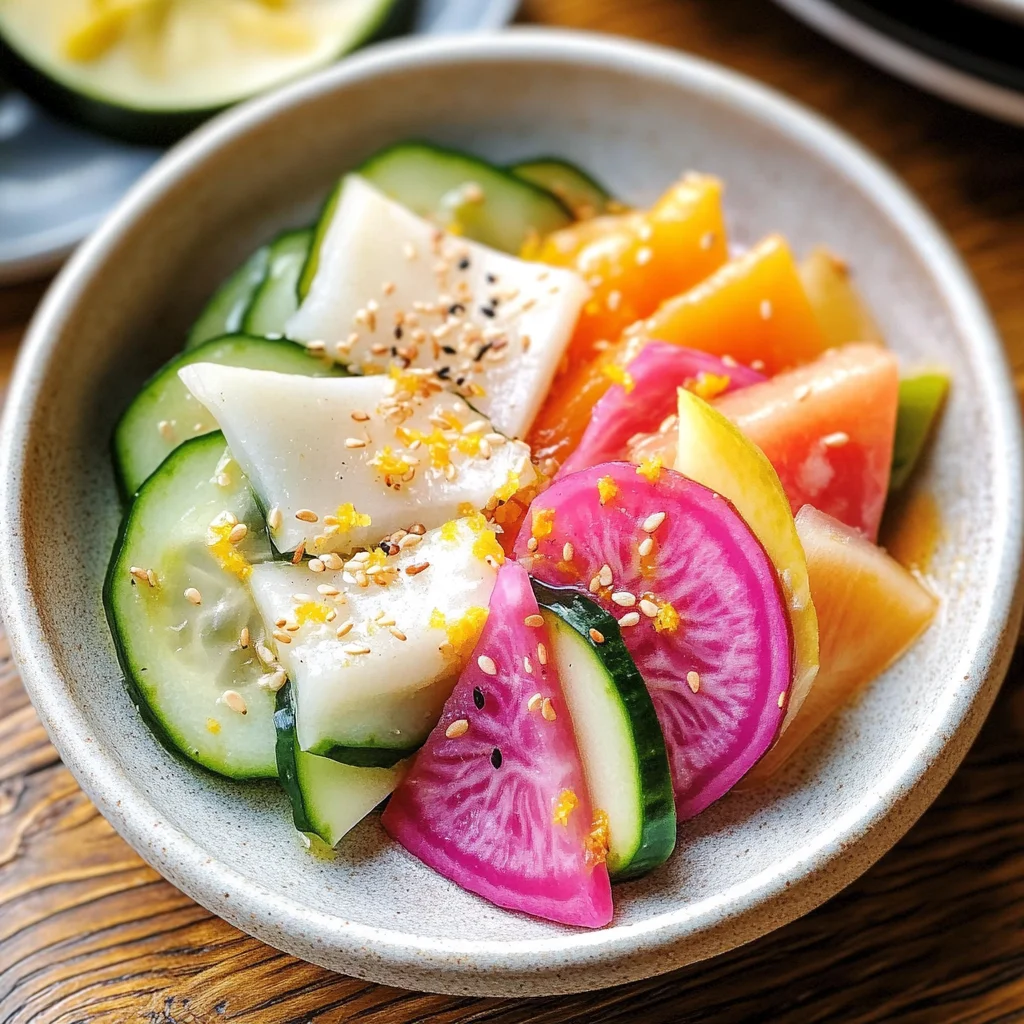
Ingredients
For the Vegetables
- 4 leaves napa cabbage (11 oz, 300 g; or use green cabbage)
- 2 inches daikon radish (6 oz, 170 g; or use turnips or cauliflower)
- 1 Japanese or Persian cucumber (4.5 oz, 128 g)
- ½ watermelon radish (3.5 oz, 100 g; or use red radish)
- ⅓ carrot (1.6 oz, 45 g)
For the Pickling Brine
- Diamond Crystal kosher salt
- ½ tsp sugar
- 1 piece kombu (dried kelp) (1 x 2 inches or 2.5 x 5 cm per piece)
Optional Enhancements
- 5 shiso leaves (perilla/ooba) (best if included)
- Toasted sesame oil (for drizzling)
- Toasted white sesame seeds (for sprinkling)
- Yuzu zest (optional)
How to Make Asazuke (Japanese Lightly Pickled Vegetables)
Step 1: Prepare Your Ingredients
- Gather all your ingredients and tools.
- Weigh the empty large bowl using the digital kitchen scale so that you can measure the weight of the vegetables accurately.
Step 2: Chop the Vegetables
- Use a knife on a cutting board to chop each vegetable into bite-sized pieces.
- Aim for uniform sizes to ensure even pickling.
Step 3: Mix the Brine
- In your large bowl, combine kosher salt and sugar.
- Add kombu and mix well until dissolved.
Step 4: Combine Vegetables with Brine
- Add all chopped vegetables into the brine mixture.
- Toss gently until all pieces are coated evenly.
Step 5: Pickle the Vegetables
- Cover the bowl with plastic wrap or a lid.
- Let it sit at room temperature for at least one hour or refrigerate overnight for deeper flavor.
Step 6: Serve and Enjoy!
- Once ready, drizzle with toasted sesame oil.
- Garnish with toasted white sesame seeds and yuzu zest if desired before serving.
Enjoy your homemade Asazuke as a delightful side dish that complements various meals!
How to Serve Asazuke (Japanese Lightly Pickled Vegetables)
Asazuke are a delightful addition to any meal, bringing crunch and flavor to your plate. These Japanese lightly pickled vegetables can be enjoyed in various ways, enhancing both simple weeknight dinners and festive gatherings.
As a Side Dish
- Serve alongside grilled chicken or beef for a refreshing contrast.
- Pair with rice dishes to balance flavors and add texture.
In a Rice Bowl
- Layer Asazuke over a bowl of steamed rice for added crunch.
- Mix in some protein like tofu or chicken for a complete meal.
In a Salad
- Toss Asazuke into mixed greens for a vibrant salad.
- Add nuts or seeds for extra crunch and nutrition.
On Sandwiches or Wraps
- Use Asazuke as a topping in sandwiches or wraps.
- They add an exciting crunch that complements meats and spreads.
As Part of a Bento Box
- Include Asazuke in your bento box alongside sushi or onigiri.
- They bring color and variety to your lunch.
How to Perfect Asazuke (Japanese Lightly Pickled Vegetables)
Perfecting your Asazuke is simple with just a few tips. Follow these suggestions to enhance the flavor and texture of your pickles.
- Use fresh vegetables: Freshness impacts the crunchiness and taste of your Asazuke. Choose vibrant vegetables free from blemishes.
- Adjust salt levels: If you prefer less salty pickles, reduce the amount of kosher salt used. Balance is key for flavor.
- Experiment with flavors: Add additional ingredients like garlic or ginger for an extra kick. This can personalize your pickling experience.
- Time matters: Allow the vegetables to pickle for at least 1 hour but up to overnight for deeper flavors. The longer they sit, the better they taste!
- Store properly: Keep any leftovers in an airtight container in the fridge. This preserves freshness and flavor for several days.
- Try different veggies: Feel free to substitute with other crunchy vegetables like bell peppers or zucchini for unique variations.
Best Side Dishes for Asazuke (Japanese Lightly Pickled Vegetables)
Asazuke pairs beautifully with many side dishes, making them versatile for any meal. Here are some excellent options to consider:
- Teriyaki Chicken: Sweet and savory chicken glazed with teriyaki sauce complements the tangy pickles perfectly.
- Grilled Salmon: The rich flavor of grilled salmon balances well with the lightness of Asazuke.
- Vegetable Tempura: Crispy tempura adds texture that contrasts nicely with the crunchy pickles.
- Miso Soup: A warm bowl of miso soup provides comfort and enhances the overall dining experience.
- Sushi Rolls: Enjoy Asazuke alongside sushi rolls for a refreshing bite between pieces.
- Steamed Edamame: Lightly salted edamame offers protein while keeping the meal healthy and light.
- Noodle Salad: Cold noodle salads tossed in sesame dressing work wonderfully with the pickled veggies.
- Chirashi Sushi: A colorful mix of seafood over rice allows you to enjoy multiple flavors together with Asazuke.
Common Mistakes to Avoid
Many people encounter challenges when making Asazuke. Here are some common mistakes and how to prevent them.
- Skipping the salt: Salt is essential for drawing out moisture from vegetables, enhancing flavor, and aiding in the pickling process. Always measure the right amount of salt before starting.
- Not weighing the vegetables: If you don’t weigh your vegetables, it’s easy to over-salt or under-salt the mix. Use a digital kitchen scale for accurate measurements.
- Ignoring resting time: Some may think that a shorter pickling time will suffice. However, allowing at least 1 hour for pickling is crucial for developing flavors. Patience pays off!
- Choosing the wrong container: Using inappropriate containers can affect the pickling process. Opt for glass or food-safe plastic containers that seal well to keep air out.
- Overlooking optional ingredients: Ingredients like shiso leaves and yuzu zest elevate flavor and aroma. Don’t skip these if you have them on hand!
Storage & Reheating Instructions
Refrigerator Storage
- Store Asazuke in an airtight container in the refrigerator.
- It can last up to 5 days while maintaining its crunchiness.
- Keep it away from strong-smelling foods to avoid flavor transfer.
Freezing Asazuke (Japanese Lightly Pickled Vegetables)
- Freezing is not recommended as it can change the texture of the vegetables.
- If necessary, use a freezer-safe container but expect softer results when thawed.
Reheating Asazuke (Japanese Lightly Pickled Vegetables)
- Oven: Preheat to 350°F (175°C) and heat in a baking dish covered with foil for about 10 minutes.
- Microwave: Place in a microwave-safe dish and cover. Heat on medium power for 30 seconds, stirring halfway through.
- Stovetop: Warm gently in a pan over low heat until heated through, stirring occasionally to keep even heating.
Frequently Asked Questions
Here are some common queries regarding Asazuke.
What are Asazuke (Japanese Lightly Pickled Vegetables)?
Asazuke refers to Japanese lightly pickled vegetables that are quick to prepare, usually needing just about an hour of pickling time.
How long do I need to pickle Asazuke?
For best results, allow your Asazuke to pickle for at least 1 hour. You can also leave it overnight for more intense flavors.
Can I customize my Asazuke recipe?
Absolutely! Feel free to add other seasonal vegetables or different herbs like cilantro or mint for unique flavors.
Are there any alternatives for vegetables in Asazuke?
Yes! You can replace napa cabbage with green cabbage or daikon radish with turnips or cauliflower based on preferences or availability.
Final Thoughts
Asazuke (Japanese Lightly Pickled Vegetables) is not only colorful and crunchy but also incredibly versatile. This simple recipe allows customization based on your vegetable preferences and seasonal availability. Try it today and enjoy a refreshing side dish with numerous meal options!
PrintAsazuke (Japanese Lightly Pickled Vegetables)
Asazuke is a traditional Japanese quick pickle made by lightly salting fresh vegetables to draw out moisture while preserving their natural crunch and vibrant flavor. This refreshing side dish is delicately seasoned with kombu and a touch of sugar, making it crisp, clean, and beautifully balanced.
- Prep Time: 20 minutes
- Cook Time: 2–4 hours
- Total Time: 2 hours 20 minutes (minimum)
- Yield: Serves 4
- Category: side dish
- Cuisine: Japanese
Ingredients
For the Vegetables
4 leaves napa cabbage (about 11 oz / 300 g), or green cabbage
2 inches daikon radish (about 6 oz / 170 g), or turnips/cauliflower
1 Japanese or Persian cucumber (about 4.5 oz / 128 g)
1/2 watermelon radish (about 3.5 oz / 100 g), or red radish
1/3 carrot (about 1.6 oz / 45 g)
For the Pickling Brine
1–1 1/2 teaspoons Diamond Crystal kosher salt (about 1.5–2% of total vegetable weight)
1/2 teaspoon sugar
1 piece kombu (1 x 2 inches / 2.5 x 5 cm)
Optional Enhancements
5 shiso leaves, thinly sliced
A drizzle of toasted sesame oil
Toasted white sesame seeds
Fresh yuzu zest
Instructions
- Wash and prepare all vegetables. Cut napa cabbage into bite-sized pieces, thinly slice the daikon and watermelon radish, julienne the carrot, and slice the cucumber into thin rounds.
- Place all prepared vegetables in a large bowl. Sprinkle with salt and sugar.
- Gently massage the vegetables with clean hands for 1–2 minutes until they begin to release moisture and soften slightly.
- Add the kombu piece and mix lightly.
- Transfer the vegetables to a zip-top bag or container. Press out excess air and place a light weight on top (such as a small plate) to encourage quick pickling.
- Refrigerate for 2–4 hours for a light pickle, or up to overnight for deeper flavor.
- Before serving, remove the kombu and gently squeeze out excess liquid.
- Add optional shiso leaves, a drizzle of toasted sesame oil, sesame seeds, or yuzu zest as desired. Serve chilled.
Nutrition
- Calories: 60 kcal per serving